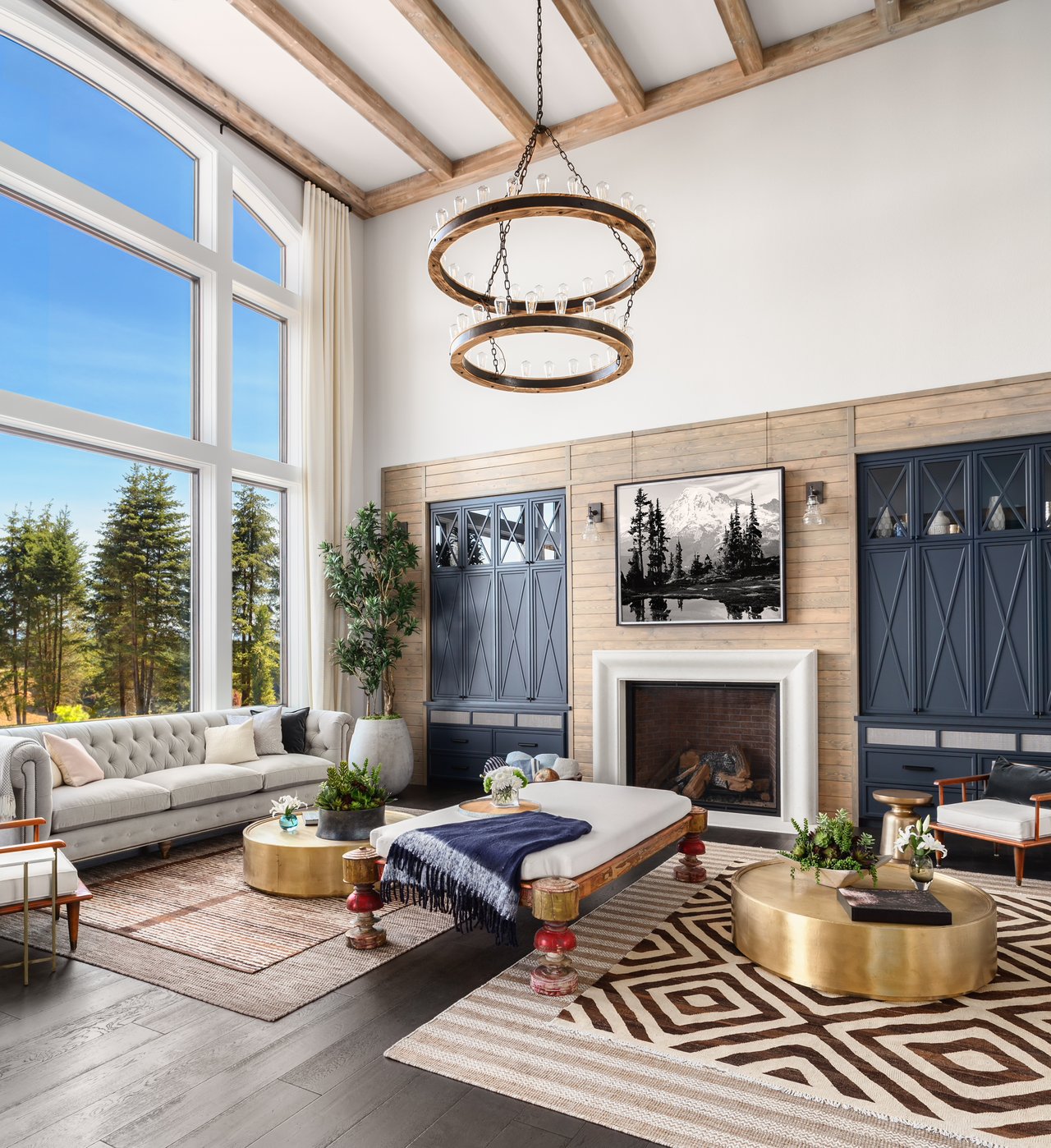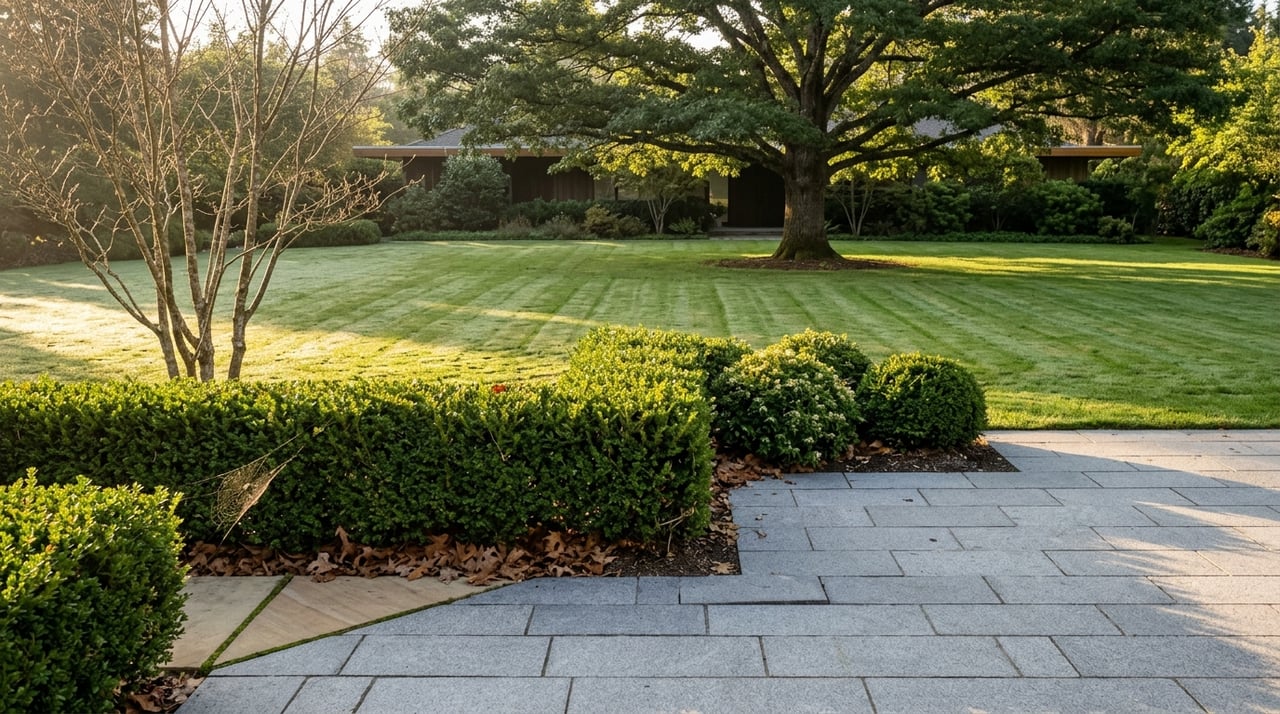
A house at 9001 NE 14th St went on the market asking $17 million. It sat for 178 days. It closed at $13.5 million, 79 percent of the original ask, a gap of $3.5 million that no headline median price would have predicted. That single transaction says more about buying and selling in Clyde Hill this year than any number pulled from a portal homepage.
If you've been watching Clyde Hill from the outside, you've probably already seen a median price quoted somewhere. The trouble is that the number depends entirely on where you looked, and in a city this small, that dependence is the whole story.
Five market measures, five Clyde Hill snapshots
Pull up several data sources in the same season and you get different pictures of the same one-square-mile city.
| Source and metric | What it measures | Window | Figure |
|---|---|---|---|
| A widely used home value index | smoothed value estimate across all homes | as of May 2026 | $3.86 million |
| MLS-based sold median | actual closed sales | February 2026 | $4.73 million |
| MLS-based sold median | actual closed sales | April 2026 | $6.99 million |
| Active listing median | current asking prices | August 2026 | $6.2 million |
| Trailing sold median | closings over six months | six months ending June 2026 | $5.7 million |
None of these sources is wrong. They're measuring different things over different windows in a place where the sample size is tiny enough that a single sale can move the number by six figures. Clyde Hill closed only two homes in February 2026 and eighteen in April. When your entire dataset for a month could fit in a school bus, "median" stops meaning what it means in Bellevue or Kirkland, where hundreds of homes trade every month and outliers get absorbed into the average.
This is not a Clyde Hill-specific quirk of bad reporting. It's what happens to any statistic when you shrink the sample down to a few dozen ultra-luxury transactions a year. The median isn't lying. It's just not built to answer the question buyers are actually asking, which is: what happens if I write an offer this month?
The market underneath the number
If the median is unreliable, what actually tells you what's happening in Clyde Hill right now? Four indicators do more work than the median ever could.
The sale-to-list price ratio, the share of the final asking price a home actually closes at, has moved from 99.1 percent in 2025 down to 95.4 percent in 2026. On a $4 million home, that 3.7-percentage-point drop is real money on the table for a negotiating buyer.
Cancellations have nearly doubled. All of 2025 produced 14 cancelled listings in Clyde Hill. The first six months of 2026 alone produced 25. That is not a market crashing. It's a market rejecting mispriced inventory faster and more visibly than it used to.
And days on market has split into two distinct experiences depending on how a home is prepared and priced. Homes that come to market accurately priced and properly staged are closing in an average of 21 days. Homes that rely on aspirational pricing are dragging the overall average out to 58 days, up from 35 days in 2025. Two addresses, 9901 NE 32nd and 8550 NE 28th, have each relisted multiple times at successively lower prices, a public and expensive way to find the ceiling a seller couldn't see at the start.
Underneath all of that sits a second market almost nobody sees on the public listing feed. Seven homes have sold off-market in Clyde Hill so far in 2026 (year to date through mid-2026), averaging $5.45 million, and closing at 100 percent of asking price. One of them, a home built in 2025 at 9703 NE 14th St, sold for $5.6 million with zero days on market and zero negotiation. The buyers and sellers who transact quietly are getting a completely different experience than the ones fighting it out on the MLS, which means the public data that produces those competing medians is describing only part of the market to begin with.
What the price is actually buying
Here's the part that matters if you're comparing Clyde Hill to somewhere else on the Eastside. The premium in Clyde Hill was never really about square footage. It was about buying into an incorporated city of roughly 3,161 residents that has spent seven decades using its own zoning authority to control lot sizes and keep commercial development to almost nothing. Today Clyde Hill has exactly two businesses: a gas station and a coffee shop, the Queen Bee.
That level of control requires ongoing public spending. Clyde Hill's 2026 budget is $6.7 million, and more than half of it, $2.8 million for its own police department and $900,000 for a contracted fire agreement with Bellevue, goes to public safety alone. The city has run a deficit in five of the last seven years. Mayor Dean Hachamovitch, who took office after his predecessor resigned, put it plainly in his own writing before taking the job, as reported by The Urbanist: "We got here by a process of denial and delay."
Voters will decide what happens next on November 3, 2026. Proposition 1 asks Clyde Hill residents to raise the city's property tax rate from roughly $0.30 to $0.50 per $1,000 of assessed value, a change city documents estimate at about $900 more per year on a $4 million home. Without it, city officials have said Clyde Hill could face insolvency by 2030 and, in the most extreme scenario, be forced to annex into a neighboring city, ending its independent zoning authority entirely.
The zoning authority itself is also under pressure from a different direction. State housing law now requires cities Clyde Hill's size to allow more housing per lot, and Clyde Hill has responded by permitting only cottage housing, capping its size so tightly that critics argue it defeats the purpose of the state law. Futurewise, a land use advocacy group that successfully challenged neighboring Mercer Island on similar grounds, has filed a comparable petition against Clyde Hill's comprehensive plan.
None of this means Clyde Hill is about to look different next year. But it does mean the thing buyers are really paying a premium for, the expectation that a one-square-mile city will keep enforcing the most restrictive zoning code in the region, is more contested right now than it has been in decades.
What to actually track if you're shopping here
If you're comparing Clyde Hill against Medina, Bellevue, or other Eastside enclaves, the median price is the least useful number in the file. What's worth watching instead:
- The sale-to-list ratio trend over the last two quarters, not a single month's average
- How long a specific listing has been active, including any prior relistings at a lower price
- Whether comparable inventory in your target range and lot size is trading on-market or quietly off-market
- The outcome of the November 3 levy vote, which will signal whether the city's fiscal position stabilizes or keeps eroding
- Any movement in the Futurewise petition, since a ruling could eventually affect what can be built on adjacent lots
A buyer who understands these mechanics is negotiating from a different position than one anchored to whatever median showed up in a search result.
FAQ
Will Clyde Hill start allowing duplexes or townhomes? Not under its current code. The city has limited middle housing to cottage housing only, with a size cap tight enough that state housing advocates argue it undercuts the law's intent. That position is being challenged, but no ruling has changed the code as of this writing.
What happens to my purchase if the November levy fails? A failed levy wouldn't change your closing. It would signal continued budget strain for a city that has already said insolvency is possible by 2030, which is worth factoring into a long-term hold decision rather than a near-term purchase.
How does someone get access to off-market Clyde Hill listings? Off-market sales in this market tend to move through agent relationships and direct outreach rather than public marketing, which is exactly the kind of access a well-connected local advisor can provide before a property ever reaches the MLS.
Clyde Hill rewards buyers and sellers who look past the headline number and into the mechanics driving it. If you're weighing a purchase or a sale here, or trying to understand how it stacks up against Medina, Bellevue, or another Eastside enclave, Andrea Korican can walk you through what the current data actually means for your specific situation. Let's Connect.
This article is general information, not legal, tax or financial advice. Consult a qualified professional about your situation.